
 Isabella Mueller (crime writer)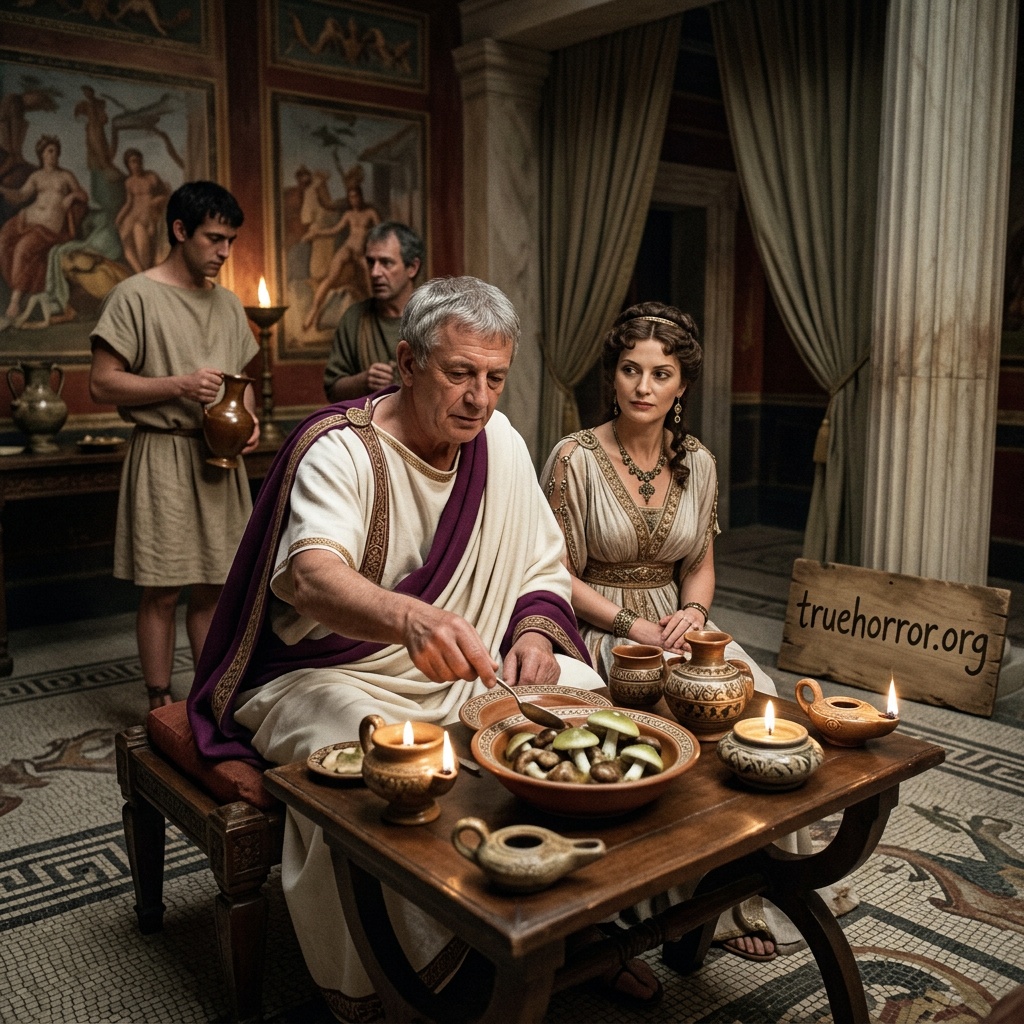
Even in ancient times, poison was a popular method for getting rid of unwanted people. One of the most spectacular poisonings of all time was the murder of Emperor Claudius. For those who held the highest office in ancient Rome lived in constant danger and could never truly be sure of their safety. It was an open secret that the Roman imperial court was a place of power struggles and intrigue. The emperor was therefore always in mortal danger, and the risk of being sent to the afterlife by a poison was high. Consequently, the profession of poisoner was booming in ancient Rome. To avoid potential poisoning, the imperial household employed tastemakers who ensured that the ladies and gentlemen of the noble families were not served anything lethal. Despite all these precautions at the imperial court, the emperor fell victim to a deadly poisoning. On October 13, 54, his fourth wife, Agrippina, served him a mushroom dish, which the emperor ate without suspicion and without a taster. Agrippina had prepared the dish using the highly poisonous green death cap mushroom, which looks almost identical to the button mushroom and is found in many parts of Italy. Shortly afterward, he began vomiting and suffered from diarrhea. His personal physician, Xenophon, was summoned and inserted a quill into his mouth to induce vomiting. The emperor could not have known that the tip of the quill was coated with poison, presumably blue aconite, to ensure his death. The poisonous soup had not been enough, so the quill with the deadly poison had to finish the job. Emperor Claudius died. His wife Agrippina had thus paved the way to the throne for her son Nero. For Emperor Claudius, due to his physical impairments—he limped, stuttered, and trembled—was the subject of his family’s ridicule, which is why his son Nero was to ascend the throne as his successor, which he did after the emperor’s death. Thus, the Roman Emperor Claudius was history, and his son Nero was now the new emperor of ancient Rome.