

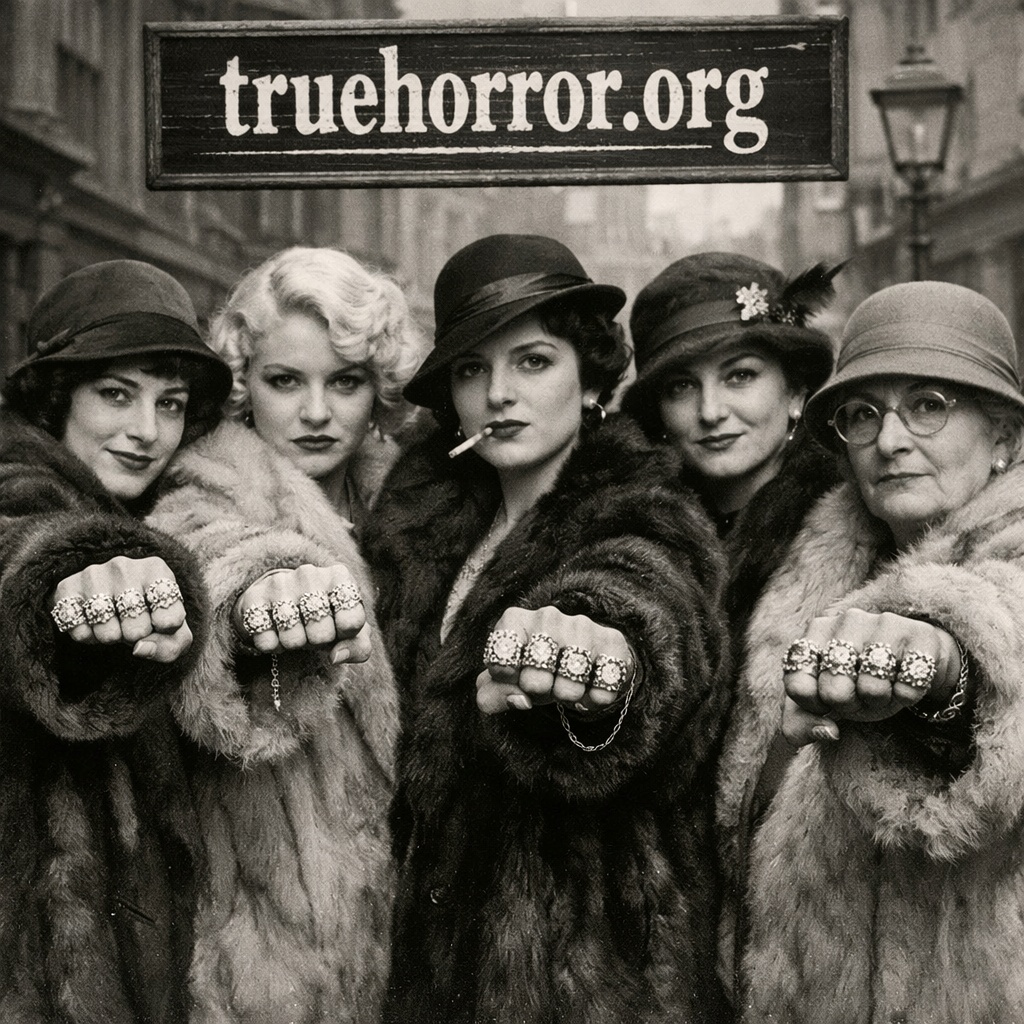
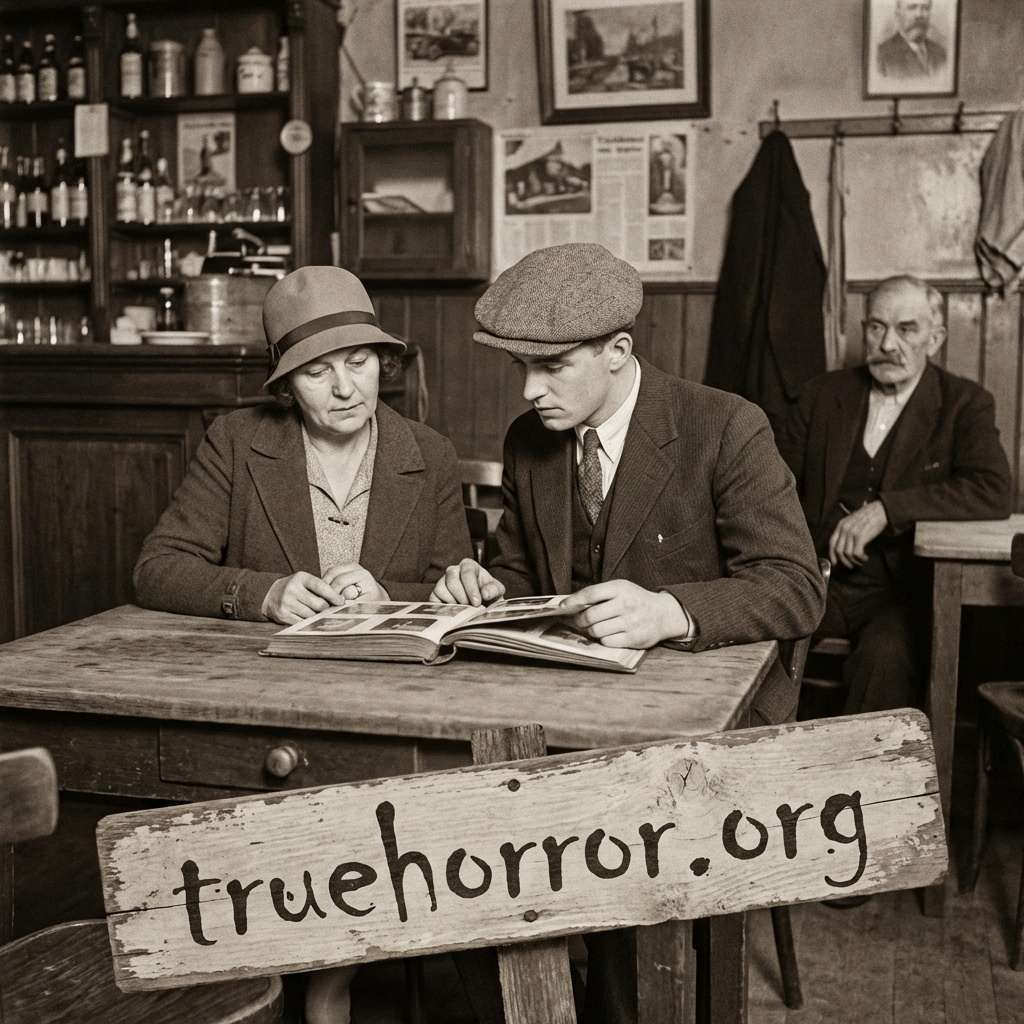
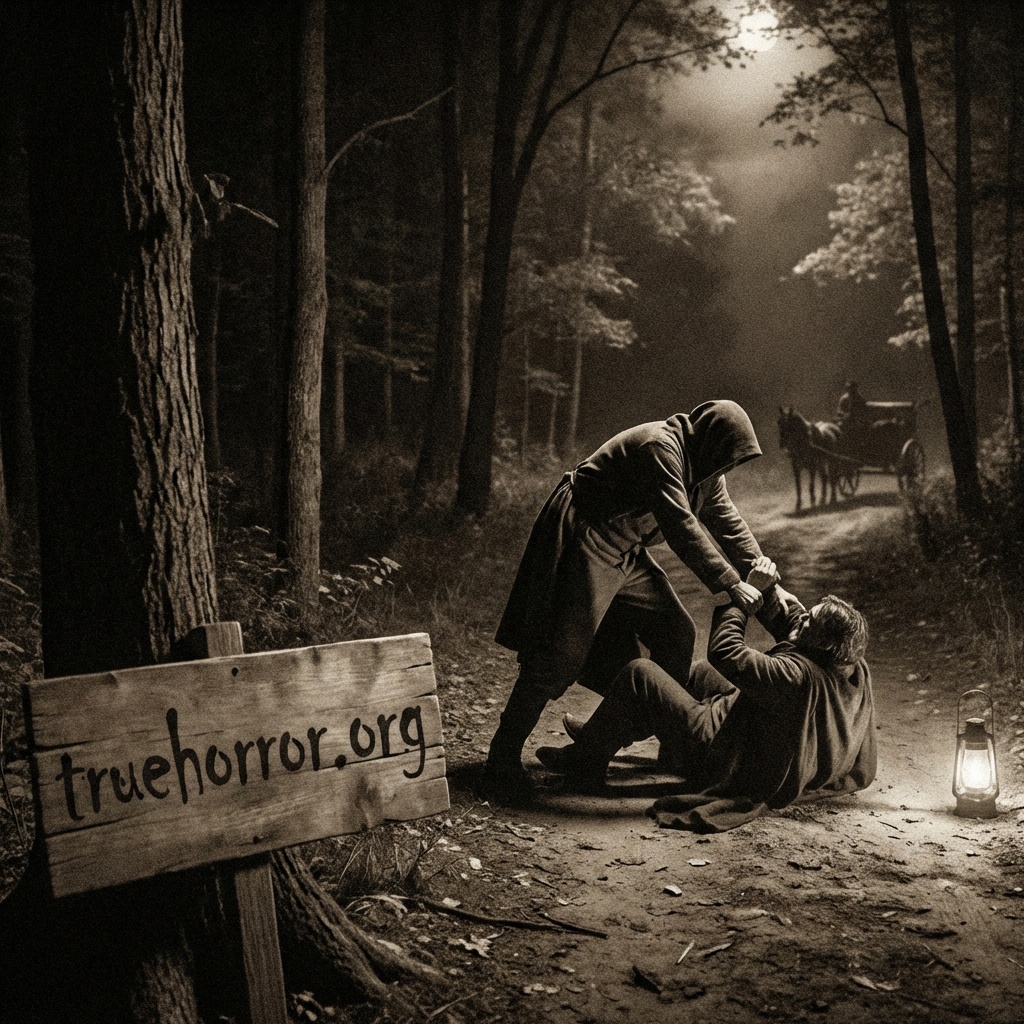
In the bustling streets of London’s West End in the 1920s, a time when glamour and misery coexisted side by side, there was a remarkable group of women whose names were almost lost in the shadows of history. The “Forty Thieves” were an all-female gang of thieves who made a name for themselves not only through their skill but also through their audacity. Dressed in luxurious fur coats and wearing diamond rings that served as knuckle dusters, these women led double lives between glamour and crime. Amid social upheaval and economic instability, these women knew how to survive while challenging the norms of society. Their story is a fascinating chapter in British criminal history and offers a unique insight into London’s underworld. The Forty Thieves formed in the 1920s, a period marked by economic depression and social unrest. This group, consisting of women from different social classes, found in crime a way to escape the constraints of society while making financial gains. Posing as wealthy housewives, they infiltrated department stores such as Harrods and Liberty and elegantly stole jewelry and other luxury items. They used specially made garments with secret compartments to hide their loot. This method was known as “clouting.” Alice Diamond, considered the undisputed queen of thieves, ruled the gang of women with an iron fist. There was the “Hoister’s Code,” a strict set of rules that every member had to follow. Alice was the daughter of a dock worker, which gave her an awareness of how to survive in the harsh life of London. Her characteristic diamond rings, which she always wore, could have served both as a symbol of her success and as a weapon. Diamond knew that elegance was the best hiding place. With their magnificent hats and fine coats, they blended seamlessly into the upscale environment in which they operated. The everyday life of the Forty Thieves was far removed from the glamour they displayed. After successful raids on department stores such as Selfridges and Harrods, they often returned to the impoverished neighborhoods of Waterloo and Elephant and Castle. There, Alice converted the stolen goods into cash, providing the women of the gang with an income that far exceeded the average male wages of the time. This financial independence was a key incentive for many members to remain loyal to the risky game. Among the notable personalities of the gang was Maggie Hughes, known as “Babyface” because of her childlike features. Despite her appearance, Maggie was a fearless operator who was known for provoking the judge with cheeky comments during her court appearances. While their main goal was theft, the women did not shy away from using violence when necessary to defend their freedom or honor. One episode immortalized in police annals involved an incident in which a policewoman was blinded by one of the women with a hatpin—a clear sign of the sharp line the thieves drew to assert their position. This willingness to use violence earned them the respect not only of other criminal gangs, but also of the notorious Kray twins, who themselves ruled the London underworld. But despite their brutality, the members of the Forty Thieves remained closely knit, more like a family than just a gang. It was a community that stood up for each other, often hidden in understated elegance, but always ready to unleash the sharp edges of their business. The stories of the Forty Thieves were later immortalized in various publications and films, including “The Queen of Thieves” by Beezy Marsh. These books and films helped lift the veil of mystery surrounding these impressive women. They portrayed women who not only survived in a male-dominated world, but thrived by carving out their own niche in the underworld. The gang may have disbanded, but their influence remains palpable. They show that strength and intelligence know no gender boundaries and that elegance and acumen can often go hand in hand. By subverting the conventions of their time, the Forty Thieves created a role model for women who want to forge their own paths—whether within or outside the law. London’s Forty Thieves rewrote history with their fearless approach to life in crime. They remain a fascinating example of how skill and bravery can push the boundaries of what is possible in society. Through the lens of these extraordinary women, we gain a vivid impression of the complex dynamics of London’s underworld in the first half of the 20th century.
Forty Thieves: London’s legendary gang of female gangsters





Leave a Reply