 Isabella Mueller (crime writer)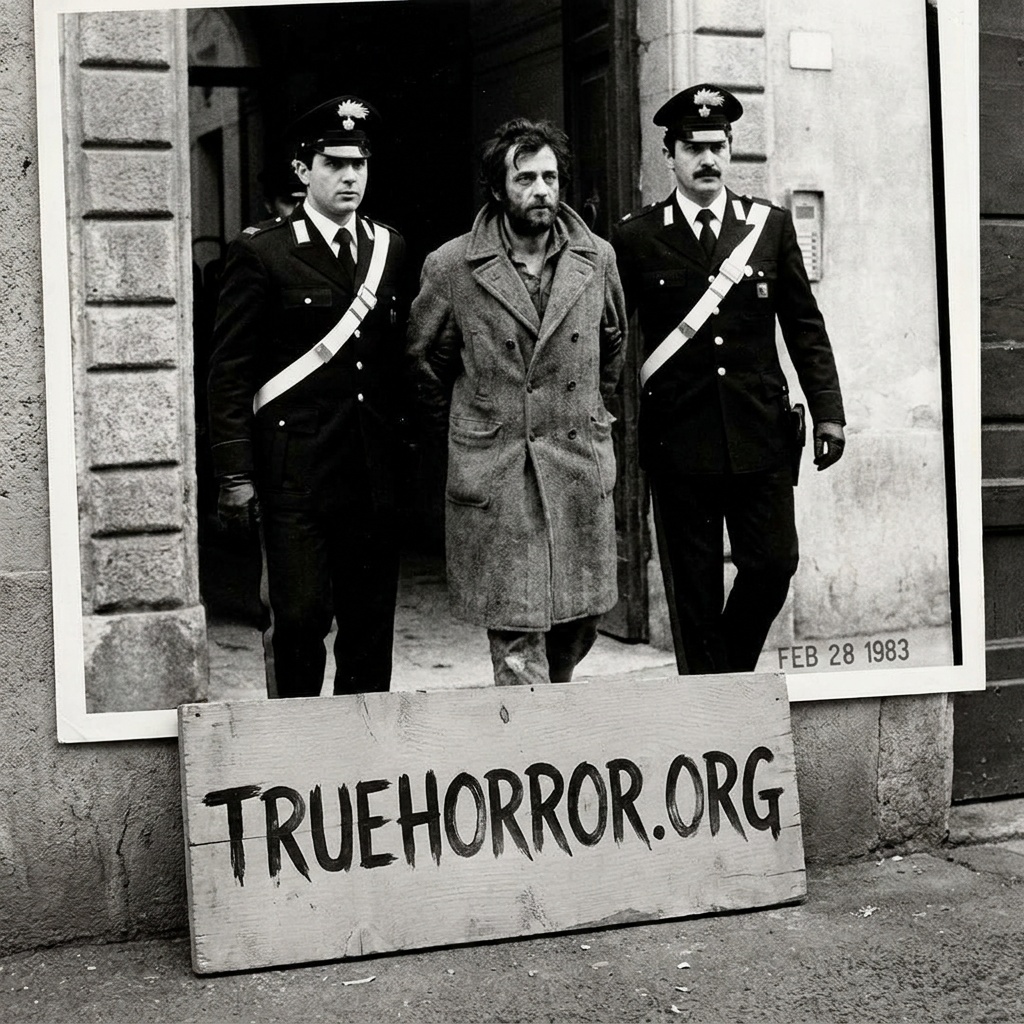
An Italian serial killer who remains an enigma to this day, as he simply murdered people without any apparent motive, was Roberto Succo. He was born on 3 April 1962 in Mestre, the son of a detective. Roberto was regarded as a polite young man who was studying at university and had a penchant for poetry. He himself loved writing poetry. No one suspected that behind the façade of the gentle-natured student lay a ticking time bomb, which exploded on 9 April 1981. On that day, Roberto, aged just 19, killed his parents by stabbing his mother to death and strangling his father. He then mutilated their bodies beyond recognition and placed them in the bath. For the brutal double murder of his own parents, Roberto Succo was sentenced to 10 years’ imprisonment, which he served in the psychiatric prison in Reggio nell’Emilia. But that was by no means the end of Roberto’s criminal career. On 15 May 1986, he managed to escape over the roof of the institution. Roberto’s spectacular escape sparked a media frenzy, as, whilst on the run over the course of two years across four European countries, he committed further murders, car thefts, robberies, hostage-takings and rapes. At the time, Roberto was considered one of the most wanted criminals in Italy, France and Switzerland. He topped their most-wanted lists and was regarded as public enemy number one. It was not until 28 February 1983 that the police were able to apprehend Roberto in his home town of Mestre. Just four days after his arrest, Roberto attempted to escape again by climbing naked onto the prison roof. He threw bricks around and uttered incoherent tirades of hatred. This spectacle was captured on film by an Italian television crew. This time, however, Roberto did not manage to escape, as he was overpowered. Just a few months later, on 23 May 1988, Roberto committed suicide in his prison cell in Vicenza by pulling a plastic bag over his head, causing him to suffocate in agony. In 1988, the playwright Bernard-Marie Koltès created a monument to this cold-blooded serial killer with his play Roberto Zucco, in which he is stylised as a hero. To this day, Roberto Zucco’s life provides ample material for books and films.