 Isabella Mueller (crime writer)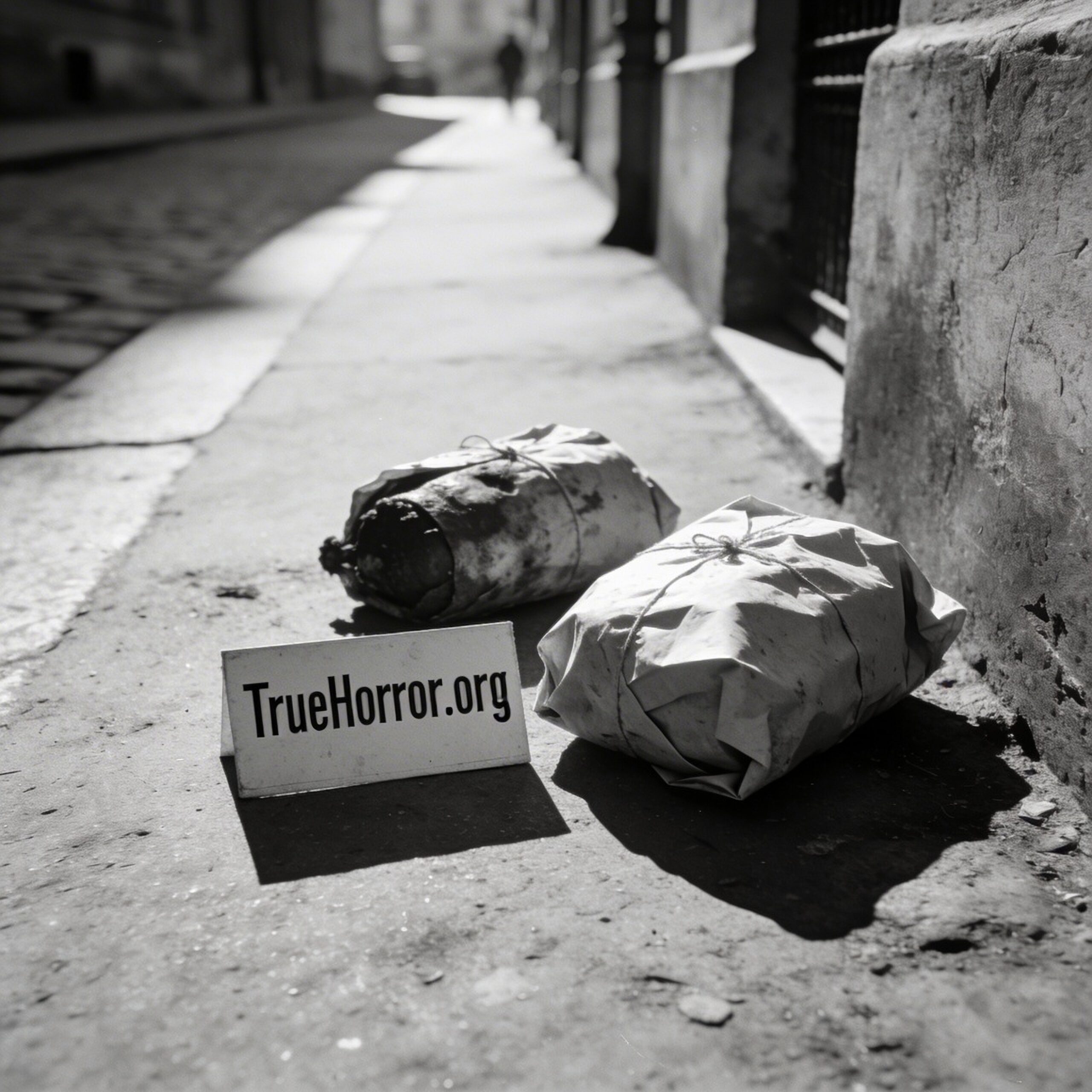
On March 9, 1931, at around 6:15 a.m., laborer Eduard Fuchs made a gruesome discovery at Krummgasse 2 in Vienna’s 3rd district, Landstraße. He found two legs wrapped in packing paper. He immediately alerted the police, who found fragments of a letter beneath the legs. The letter bore a postmark, an address, and the sender’s name. This was the only clue regarding the legs, which clearly belonged to a woman. The police sought out the addressee, but she had been missing for a few days. The police investigation led to sewer cleaner Josef Wrbik, who had been seen with the missing person. In the meantime, passersby discovered two arms wrapped in packing paper and a black lace-up boot in the Karl Borromäus Fountain on the square of the same name in Vienna’s 3rd district, Landstraße. The police assumed that these belonged to the legs that had been found. The police then questioned the 50-year-old civil servant Josef Wrbik, with whom the missing person had last been seen. He had been born on December 4, 1881, in Toleschowitz, Bohemia. He had been a civil servant for the City of Vienna for 30 years, working at the District Office 1030 on Sechskrügelgasse. During a search of his office, forensic investigators found several bloodstains on Josef Wrbik’s clothing, the curtain, a shovel, and the floor. A staircase led from one room down to the basement. There, police officers found a pair of blood-stained women’s panties and the torso of a female corpse. Josef Wrbik was taken to the police station for questioning. Faced with overwhelming evidence, he confessed to the murder of the woman he had met in a tavern on the night of March 6–7, 1931, and killed. To ensure no one could identify the body, he had dismembered it. The motive for the murder was quite simple. Although Josef Wrbik wanted to have sex with his new acquaintance, he did not want to pay for it. An argument ensued, after which Josef Wrbik killed the woman. Based on the fingerprints, the woman’s body was unequivocally identified as the recipient of the letter, the unskilled laborer Marie Novacek from Bohemia. She already had over 25 prior convictions for prostitution and alcoholism. Since Josef Wrbik had been regarded as an honorable civil servant who had served the City of Vienna faithfully for 30 years and had confessed to the crime, the sentence of 7 years in prison was quite lenient, which is why the prosecution appealed, resulting in Josef Wrbik’s prison term being increased to 12 years. Yet after just 8 years, he was released for good behavior. At that time, murders of prostitutes were generally not punished particularly harshly, as they were considered women of loose morals. Incidentally, there is even a sexual position named after the Danube metropolis of Vienna. This is the “Viennese Oyster.” In this position, the woman lies on her back and wraps her legs over the man’s shoulders, allowing him to penetrate her very deeply. Particularly flexible women clasp their legs together behind the man’s back. The name of this sexual position is said to originate from the Viennese painter Peter Johann Nepomuk Geiger, who painted a couple in this erotic position in 1840.