
 Isabella Mueller (crime writer)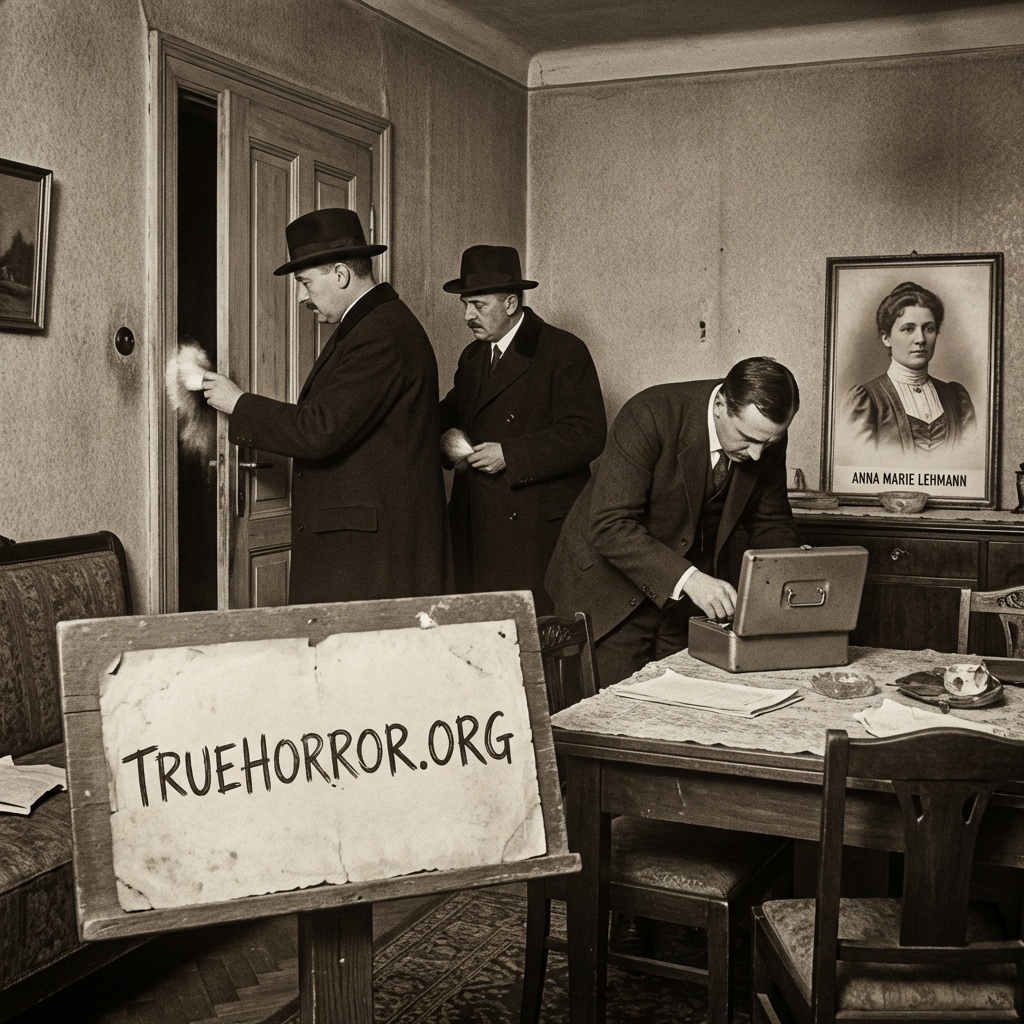
The first murder case in Germany to be solved using dactyloscopy was the murder of Anna Marie Lehmann, the widow of a Dresden civil servant. Dactyloscopy is a forensic method of identifying individuals based on the papillary ridges of fingers, palms, and soles of the feet. This method solved the 1914 murder of Anna Marie Lehmann, who had been found dead in her apartment on the evening of July 4 by residents, with a cord around her neck. Forensic investigators examined the victim’s apartment and found fingerprints on both the bedroom door and a cash box. These were the only clues the criminal investigation department had. An inquiry into her immediate circle had yielded no results, and there were no witnesses. Who had killed the widow? Then a miracle occurred. For the first time in German criminal history, the fingerprints found in the deceased’s apartment led to the murderer. From a collection of 150,000 fingerprint cards, the card was found that matched the fingerprints on the cash box and bedroom door in the civil servant’s widow’s apartment, and these belonged to the seamstress Marie Margarethe Müller. Without these fingerprints, the criminal investigation department would never have suspected her. Marie Margarethe Müller was arrested immediately, but during questioning she vehemently denied having murdered the civil servant’s widow. The seamstress’s fingerprints had been taken a year earlier, as she had been arrested for having an abortion. The death of the civil servant’s widow reminded the chief inspector of a similar case that had occurred in May 1914. At that time, an 86-year-old woman had been found dead in her apartment in a building on the banks of the Elbe. Like the civil servant’s widow, she had a red mark on her neck. Nevertheless, the police physician assumed it was a natural death due to her age, as she had likely been lying with her head pressed to the side for an extended period, causing blood to pool in the resulting skin fold. Nevertheless, the forensic unit had secured fingerprints that did not belong to the building’s residents. These fingerprints were compared with those of the seamstress Müller, and once again they matched. The seamstress Müller had killed both women out of greed. The double murderer was charged with two counts of murder, and the jury considered it proven by the fingerprints that Marie Margarethe Müller had murdered both women in cold blood, even though she denied the murders until the very end. The seamstress Müller was sentenced to death and executed. Thanks to the fingerprint analysis, a female murderer was convicted for the first time in Germany.