The mysterious murder of Isidore Fink: An unsolvable mystery of history
 Isabella Mueller (crime writer)
4 min read
Isabella Mueller (crime writer)
4 min read
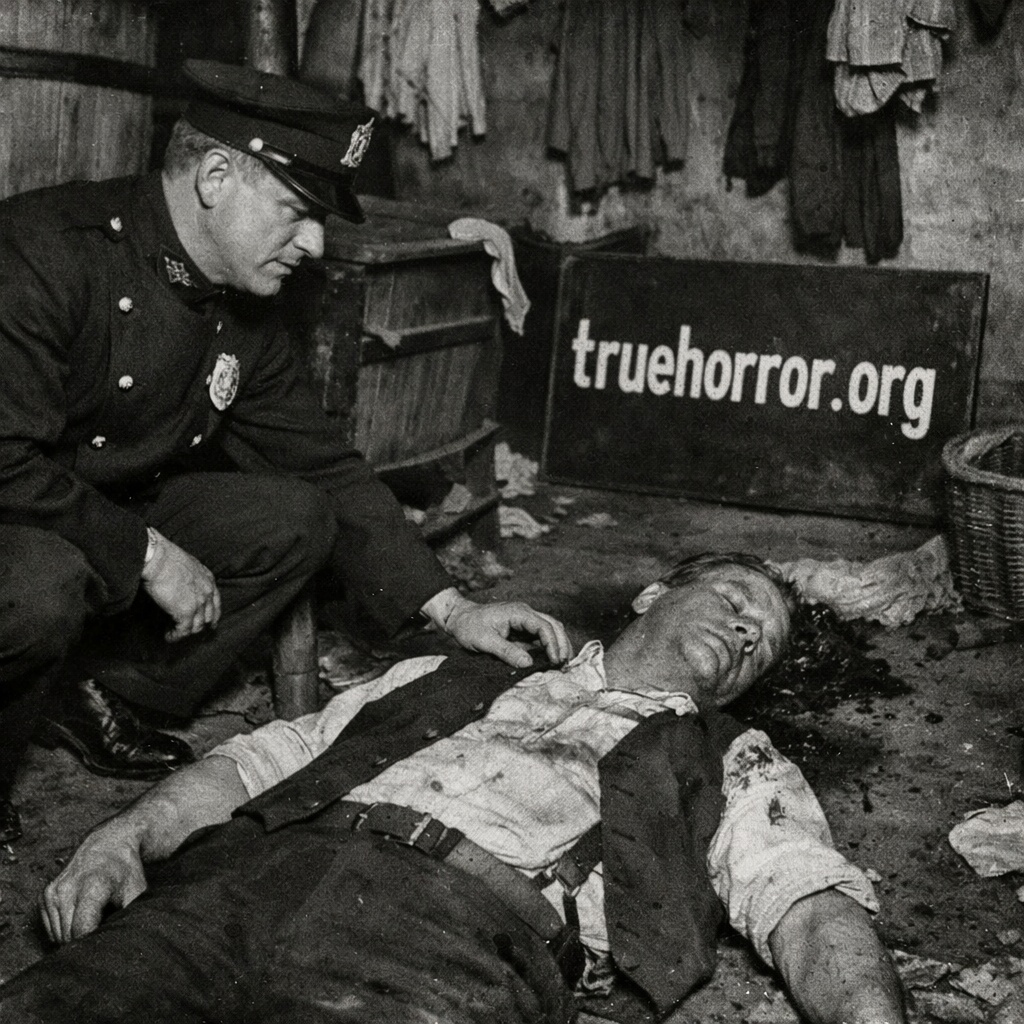
One cold case that remains a mystery to this day is the murder of Polish immigrant Isidore Fink, also known as the “locked-room mystery.” It is an impossible crime that took place in a locked room. The murder of Isidore Fink is considered a prime example of this. On the evening of March 9, 1929, a crime took place in New York City that still occupies the minds of police officers and criminal analysts to this day. The main character in this bizarre drama was 30-year-old Isidore Fink, who had emigrated to the United States after World War I in search of a better life. He was a quiet man and the proud owner of a small laundry at 4 East 132nd Street in the Harlem neighborhood of Manhattan, New York City. In this dangerous neighborhood, where robberies were commonplace, Isidore Fink responded to the risk with extreme caution, always locking the windows of his two-room shop on the ground floor of an apartment building and keeping his door locked, especially when he worked at night. Only customers he knew personally were allowed to enter the laundry. On the evening in question, Fink’s neighbor, Mrs. Locklin Smith, heard tumultuous noises coming from the laundry around 10:30 p.m. It sounded like a violent argument between two men. Filled with fear, she ran to get help. Help came in the form of patrolman Albert Kattenborn. When he entered the building and knocked on Fink’s door, he got no answer. The door was locked from the inside. He noticed a narrow skylight open above the door. Since it was impossible for Kattenborn to climb through this small window, he found a boy who could slip through. The boy opened the door from the inside so that Kattenborn could enter. At the back of the laundry, he found Fink lying lifeless on the floor. He had been shot twice in the chest and once in the left hand. A hot iron still standing on the gas stove, which was still on, indicated that the laundry owner had been attacked in the middle of his work. Kattenborn instinctively searched for a weapon but could not find one. The homicide detectives who arrived shortly afterwards were also unsuccessful. Speculation that Fink might have used a sophisticated suicide device came to nothing. They found nothing of the sort. Frustrated, the investigators even took the room apart, checking floorboards and walls, but without success. After suicide had been ruled out, the police were faced with a so-called “locked room” mystery, a well-known literary motif in detective fiction. The basic scenario is simple: a murder victim is found in a room locked from the inside, and it seems impossible that the perpetrator could have entered and left the room. In this real-life case, however, the solution simply would not come. The New York Police Department initially speculated that the killer had used the skylight as an escape route. But this theory was unlikely given the narrow window and the fact that the perpetrator would have had to be very small. An alternative theory suggested that the attacker had shot from outside through the skylight. This theory also failed, as gunshot residue on Fink’s wrist showed clear signs of a close-range shot. The medical examiner concluded that Fink had been shot in a struggle for the gun. Two more shots then hit him in the chest. Even more confusing was the question of motive. Robbery could be ruled out, as money was found both in Fink’s pocket and in the cash register. So who would want to murder an inconspicuous laundry owner? Reports of two well-dressed women who had been seen in the stairwell shortly before the crime, as well as a couple who wanted to know if Fink sold used underwear, also led nowhere. Fink’s landlord, Max Schwartz, described him as someone who had few social contacts, let alone enemies. The why and how of Isidore Fink’s murder remained unclear. Despite intensive investigations, the police were unable to determine the motive or the exact course of events. There were no fingerprints except Fink’s, nor was the murder weapon found. Two years later, on August 3, 1931, NYPD Commissioner Edward P. Mulrooney confessed on a radio show called “Man in the Front Row” that he was at a loss regarding Fink’s murder, which he described as an “unsolvable mystery.” Initially, it was suspected that Fink had been shot in the hallway and then fled back to the laundry room, where he locked the door. However, the medical examiner rejected this theory, as the chest wounds would have been fatal and Fink would not have had time to lock the door. A story from overseas years later, however, showed how surprisingly resilient the human body can be when seriously injured. In an almost identical case in England, the victim survived long enough to take measures to defend himself despite serious gunshot wounds. Another theory suggested that investigators had allowed evidence to disappear due to bribery by an unknown person. Despite all the theories, the true nature of the crime surrounding Isidore Fink remains an unsolved mystery. Perhaps the answer lies hidden in the details, or perhaps Fink was a victim of circumstances that will never come to light. The mystery surrounding the locked room and the puzzling murder remains one of the most fascinating and frustrating chapters in criminal history.