Britain’s Hannibal Lecter: The gruesome life of Robert John Maudsley in a glass cage
 Isabella Mueller (crime writer)
6 min read
Isabella Mueller (crime writer)
6 min read
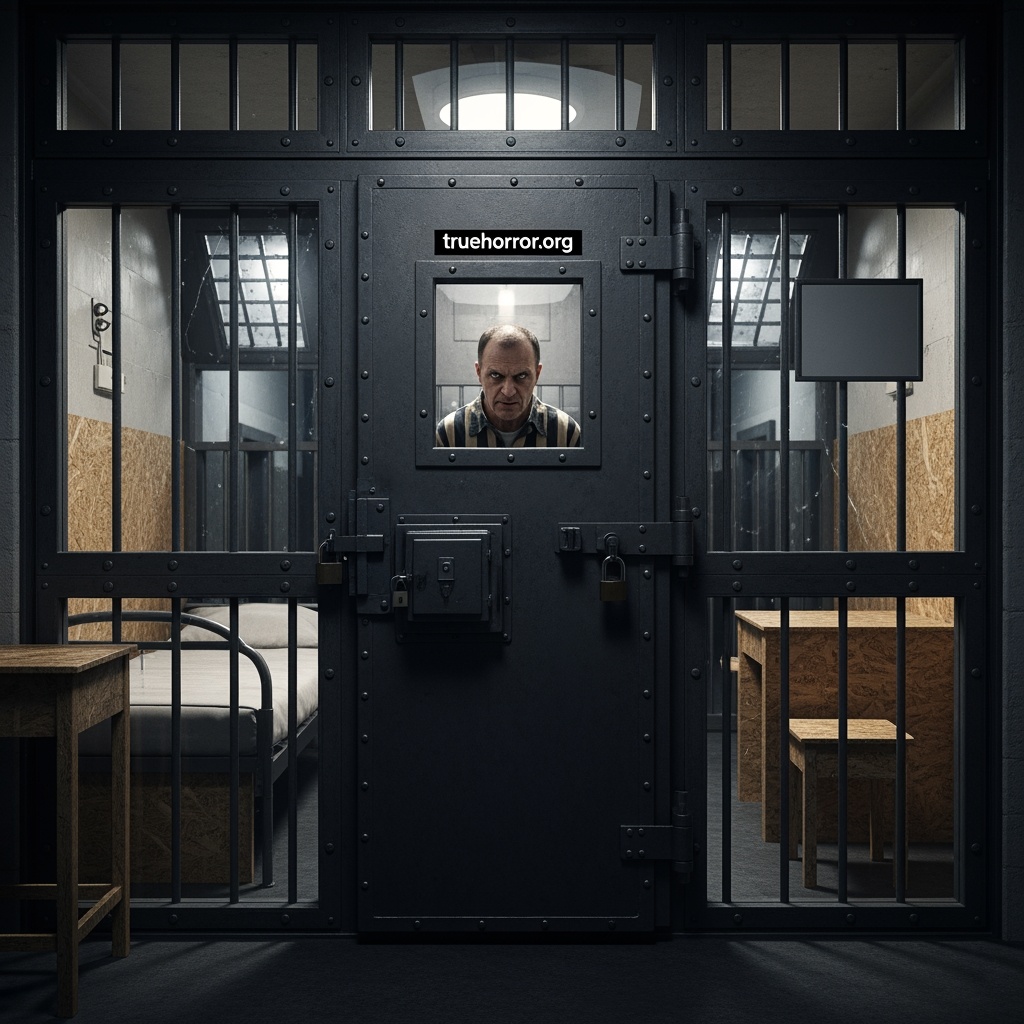
One of Britain’s most dangerous criminals, who is also the longest-serving prisoner, is Robert John Maudsley, better known as “Hannibal the Cannibal.” He was given this name by the media after he killed two men on the same day and ate their brains. But who was this cannibal who, like Hannibal Lecter from the movie “The Silence of the Lambs,” later had to spend his life in a “glass cage”? Robert John Maudsley was born on June 26, 1953, the fourth of twelve children in a poor family in Liverpool. Due to parental neglect, he and three of his siblings were taken to the Catholic orphanage “Nazareth House” in Crosby, run by nuns, where he remained for six years until his parents and siblings brought him back home. But contrary to hopes for a better future, the situation deteriorated dramatically. By then, Robert’s parents had fathered a total of 12 children. Money was tight and Robert’s father, a truck driver, was often on edge. He regularly abused his children in cruel ways. Robert was hit particularly hard, being raped and physically punished by his father. The physical abuse culminated in him being locked in a room for six months, where he was beaten by his father four to six times a day. This abuse left deep emotional scars and contributed to the development of severe psychological problems. After Robert was taken into care by the youth welfare office, he was placed with various foster families. At the age of 16, Maudsley sought refuge in London. There began a sad spiral of drug addiction and repeated suicide attempts, which led to him being admitted to psychiatric hospitals time and again. During his stays in the hospitals, Maudsley told the doctors about the voices in his head that ordered him to kill his parents. To finance his drug addiction, he offered himself as a “rent boy,” which led to a deep hatred of pedophiles. It was March 14, 1974, when Maudsley was approached by construction worker John Farrell, who took him to his apartment to have sex with him. However, when Farrell showed Maudsley photos of a girl he had abused, Maudsley saw red and slowly strangled Farrell. Maudsley enjoyed watching Farrell’s face turn blue before hitting him over the head with a hammer. The brutality of this crime was so extreme that Farrell was barely recognizable as a human being afterwards. Maudsley was sentenced to life imprisonment for murder and, due to the cruelty of the crime, was transferred to Broadmoor Hospital, a high-security facility for mentally disturbed criminals, where he spent three years. But on February 26, 1977, Maudsley committed another murder there. Together with fellow inmate David Cheeseman, they lured David Francis, another patient, into a cell and barricaded the door. They then tied him up with the cable from a record player. The 26-year-old Francis was suspected of having abused children, which is why Maudsley and Cheeseman wanted to take revenge on him. They tortured him to death for almost 10 hours, while the prison officers had to listen to everything without being able to intervene. A later investigation revealed that the claim that Maudsley had eaten his victim’s brain was unfounded. Nevertheless, he was given the nickname “Hannibal the Cannibal.” After the murder, Maudsley was convicted of manslaughter and transferred to Wakefield Prison in West Yorkshire, known as “Monster Mansion.” There, Maudsley’s reputation as a “brain eater” preceded him, causing his fellow inmates to shun him. Maudsley was less than enthusiastic about his new home, so he requested a transfer back to Broadmoor, which was denied. Shortly thereafter, on the afternoon of July 28, 1978, he committed his next murder. In an unprecedented act of violence, he lured 46-year-old fellow inmate Salney Darwood into his cell, where he first strangled him and then slit his throat. He hid the body under his bed. He then sneaked into the cell of 56-year-old inmate Bill Roberts, hacked his skull open, and slammed his head repeatedly against the cell wall. He subsequently confessed to these crimes to a prison officer. When the officers found the bodies, they reportedly discovered spoons sticking out of the skulls. Maudsley had used them to scoop out the brains. During the 1979 trial, it emerged that during his murders, he always believed that the victims were his parents. Maudsley was convicted of double murder and was sent to Wakefield Prison, where he was placed in solitary confinement. He spent part of his sentence in Parkhurst on the Isle of Wight, where he met psychiatrist Dr. Bob Johnson, who abruptly ended treatment after three years. Due to his extremely dangerous nature, Robert Maudsley was transferred back to Wakefield Prison, where he was housed in a specially designed cell in the basement of the prison, as he is considered one of the most dangerous prisoners. The 5.5 x 4.5 meter cell with bulletproof windows and a solid steel door consisted of two cells joined together and lined with bulletproof glass so that he could be constantly monitored. His food and other items were passed to him through a specially secured airlock. The furniture was made of chipboard. He was only allowed to leave his cell for one hour a day, accompanied by six prison officers, to walk down a strictly monitored corridor. He was forbidden from having any contact with other prisoners. After 23 years in solitary confinement, Maudsley caused a media sensation in 2000 when he wrote a series of letters to the London Times. In these letters, he complained about his prison conditions and asked for CDs of classical music, a television, pictures, personal hygiene items, and a budgie. Alternatively, if none of this was possible, he requested a cyanide capsule so that he could commit suicide. On May 15, 2017, Maudsley was the longest-serving prisoner in the UK. With 45 years in solitary confinement, he surpassed the 43 years served by American Albert Woodfox, who died in 2022. This long period in solitary confinement demonstrates the immense danger Maudsley posed to those around him. In 2025, Robert Maudsley was finally transferred to Whitemoor Prison. Despite this transfer, he remained in strict isolation, far away from other inmates. His life in a “glass cage,” cut off from all human contact, is a testament to the harshness of the British justice system toward particularly dangerous criminals. The story of Robert John Maudsley raises many questions. How could a small child who once sought refuge in an orphanage become one of Britain’s most feared serial killers? The answer may lie in a combination of genetic factors, severe childhood trauma, and mental disorders. Although he was held responsible for his actions, the question remains as to what extent society and his family contributed to his development. Maudsley’s life and crimes offer a gruesome but fascinating perspective on the dark depths of the human mind. His inability to distinguish between good and evil, coupled with an extreme hatred of certain groups of people, led him to become one of the most notorious murderers in the British penal system. Today, Robert John Maudsley stands as a symbol of the extreme measures necessary to keep particularly dangerous individuals away from the rest of society. His life in total isolation may seem inhumane, but given the brutality of his actions, it seems to be the only way to prevent him from killing again. Maudsley’s story reminds us that the boundaries between normality and madness are often blurred and that the causes of violence can lie deep within a person. It also raises ethical questions about the treatment of prisoners, especially those considered extremely dangerous. While many consider strict isolation to be necessary, one could also argue that there are more humane ways of dealing with such individuals. One thing is certain: the story of Robert John Maudsley will long be remembered as a dark chapter in the world of true crime, reminding us how thin the thread is that separates us from the abyss of madness.