
The Cookie Monster Killer of Philadelphia: Harrison Graham
 Isabella Mueller (crime writer)
5 min read
Isabella Mueller (crime writer)
5 min read
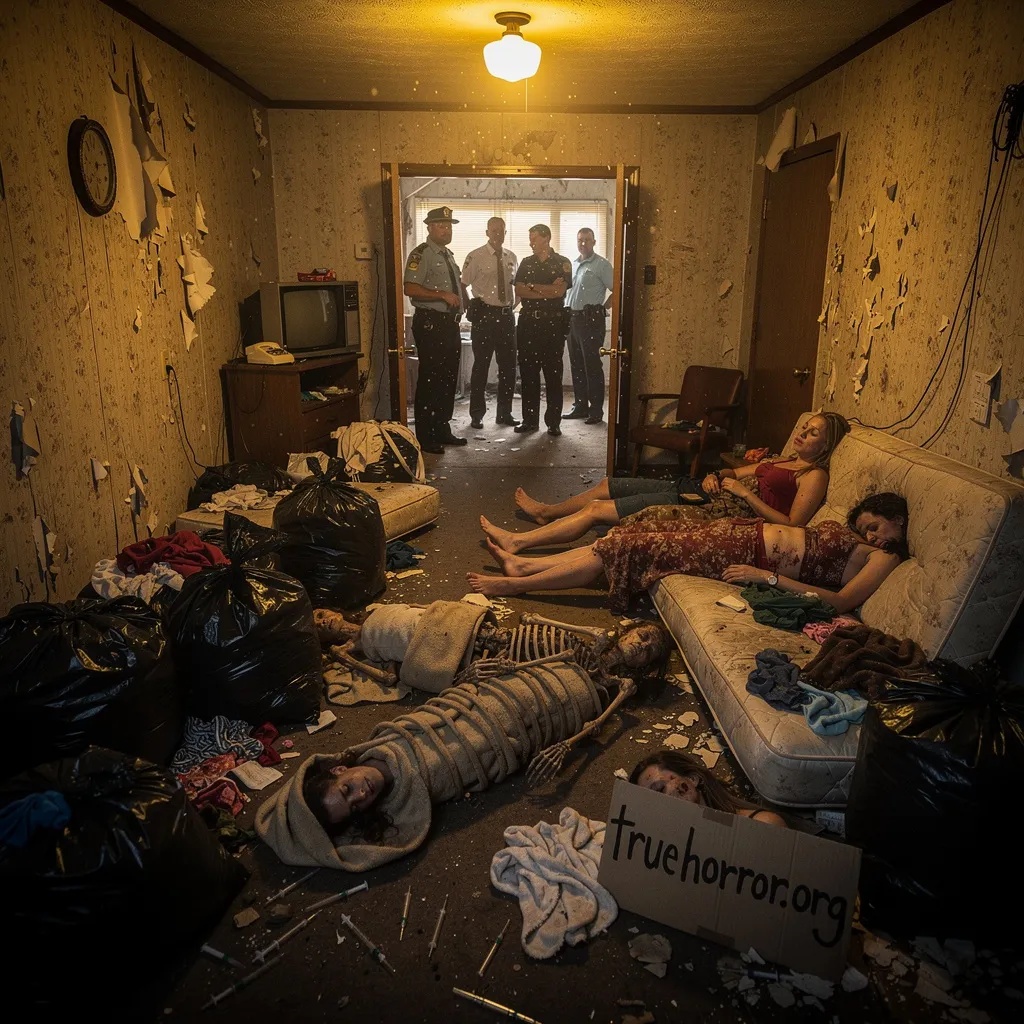
One of the most horrific crimes in Philadelphia’s history is the case of serial killer Harrison Graham, better known as the Cookie Monster Killer. Graham earned this nickname because he always carried a Cookie Monster doll with him since his youth. Graham was downright infatuated with the blue Muppet character from the children’s show “Sesame Street,” who brutally murdered seven women in Philadelphia between 1986 and 1987. In the mid-1980s, Philadelphia was a city struggling with poverty, crime, and a drug epidemic that plagued its neighborhoods. Amidst this turmoil, the horrific story of the gruesome murders committed by Harrison Frank “Marty” Graham struck fear into the hearts of Philadelphia residents. Between mid-1986 and mid-1987, Graham’s heinous acts led to the deaths of seven women, whose remains he kept in his dilapidated third-floor apartment in a Philadelphia slum. Harrison Graham was born on September 9, 1959, in Philadelphia, the eldest of five siblings. His childhood was marked by great challenges. Graham showed signs of mental disability and had difficulties in school and with discipline, which led to his expulsion from Olney High School in 10th grade due to poor grades and chronic absenteeism. His mother claimed that Harrison was diagnosed with a mental disorder in 1971 and spent two years in a psychiatric facility. However, this claim is not confirmed by official records. In the early 1970s, Graham entered the workforce and took on various jobs in the construction industry. Seeking independence, he moved to North Philadelphia in 1979, a neighborhood marked by poverty and crime. Here, Graham’s life took a dark turn. He began drinking, using drugs, and associating with pimps and prostitutes. Despite his imposing and athletic stature, he was not considered violent and had no criminal record. It was during this time that Graham acquired his beloved Cookie Monster doll, which the tall, dark-skinned Graham took with him everywhere. In 1983, Graham rented an apartment in a largely vacant residential complex. In the years that followed, he turned his apartment into a drug den frequented by both users and dealers. Although he paid his rent regularly and played basketball with the neighborhood kids, Graham’s life spiraled out of control due to his heavy drug use. Friends and neighbors described him as a likable man. In the summer of 1987, Graham’s macabre secret came to light. Neighbors complained to the landlord about a foul odor coming from his apartment, a stench that Graham ignored. On August 9, after repeated complaints, the landlord demanded that he vacate the premises. Out of spite, Graham boarded up his apartment door and fled with his cookie monster via the fire escape. The landlord, unable to gain access to the apartment, called the police. When police officers forced their way into the apartment, they were met with a horrific sight. The decomposing bodies of seven women lay amid a chaotic mess of trash, dirty mattresses, and drug paraphernalia. Some bodies were skeletonized and wrapped in blankets, while others were partially clothed and showed gruesome signs of strangulation. The state of decomposition made it difficult for investigators to determine the exact causes of death for all but two victims, who were confirmed to have been strangled. A subsequent investigation led to the discovery of additional remains on the roof and in the basement. These horrifying findings triggered an immediate manhunt for Harrison Graham. Over the following week, he was reportedly seen in various locations, including on public transportation and in homeless shelters, but managed to evade arrest. On August 17, Graham contacted his mother, who persuaded him to turn himself in. After she notified the police, he was arrested just ten blocks from his apartment by police officers Ed Spangler and Larry Brzycki. At the police station, Graham confessed to the murders and described in detail how he had strangled his victims during or after drug-related sexual encounters. His confessions were corroborated by forensic examinations, which estimated the time of death of the victims to be between ten days and several months before their discovery. The identified victims included 27-year-old Cynthia Brooks, 25-year-old Valerie Jamison, 36-year-old Mary Jeter Mathis, 22-year-old Barbara Mahoney, 29-year-old Robin DeShazor, 33-year-old Sandra Garvin, and 24-year-old Patricia Franklin. Notably, DeShazor had been Graham’s girlfriend, and witnesses later reported incidents of domestic violence and drug use in the couple’s relationship. Graham’s trial began on March 7, 1988. He waived his right to a jury trial and pleaded completely guilty during pretrial proceedings. The prosecution sought the death penalty, while his defense attorney, Joel Moldowski, pleaded for leniency due to Graham’s mental disability and impaired psychophysical development. Moldowski argued that Graham’s inability to distinguish between right and wrong, combined with his severe drug addiction, caused him to commit the murders impulsively. Throughout the trial, Graham remained eerily calm, a demeanor that stood in stark contrast to the brutality of his crimes. On April 28, 1988, he was found guilty on all counts. The court handed down six death sentences and one life sentence. As a concession, the death sentences would only be carried out after he had served his life sentence, ensuring that Graham would never be executed. In a strange post-trial request, Graham asked for the return of his Cookie Monster doll. This attachment to a harmless children’s toy stood in stark contrast to his horrific deeds and painted a complex picture of a man haunted by inner demons yet clinging to fragments of his lost innocence. Harrison Graham’s crimes occurred at the same time as those of Gary M. Heidnik, another notorious Philadelphia murderer who lived less than a mile away. Heidnik’s atrocities included the abduction, torture, and murder of women he held captive in his basement, adding another layer of horror to the city’s history during this period. The proximity and parallel nature of their crimes underscore a frightening period in Philadelphia’s criminal history and reflect society’s failure to address mental health and substance abuse issues that contributed to such tragedies. The story of Harrison Frank “Marty” Graham is a harrowing testament to the destructive potential of untreated mental illness and substance abuse. While his difficult circumstances growing up and his intellectual disability paint a picture of a man who was doomed to struggle, the brutality of his actions cannot be overlooked. Graham’s case is a serious reminder of the importance of psychological support and community intervention in preventing such devastating consequences. Graham’s crimes are a dark chapter in the city’s history, urging vigilance and compassion in addressing the root causes of such atrocities.