
The mysterious disappearance of Louis Le Prince, the true inventor of film
 Isabella Mueller (crime writer)
4 min read
Isabella Mueller (crime writer)
4 min read
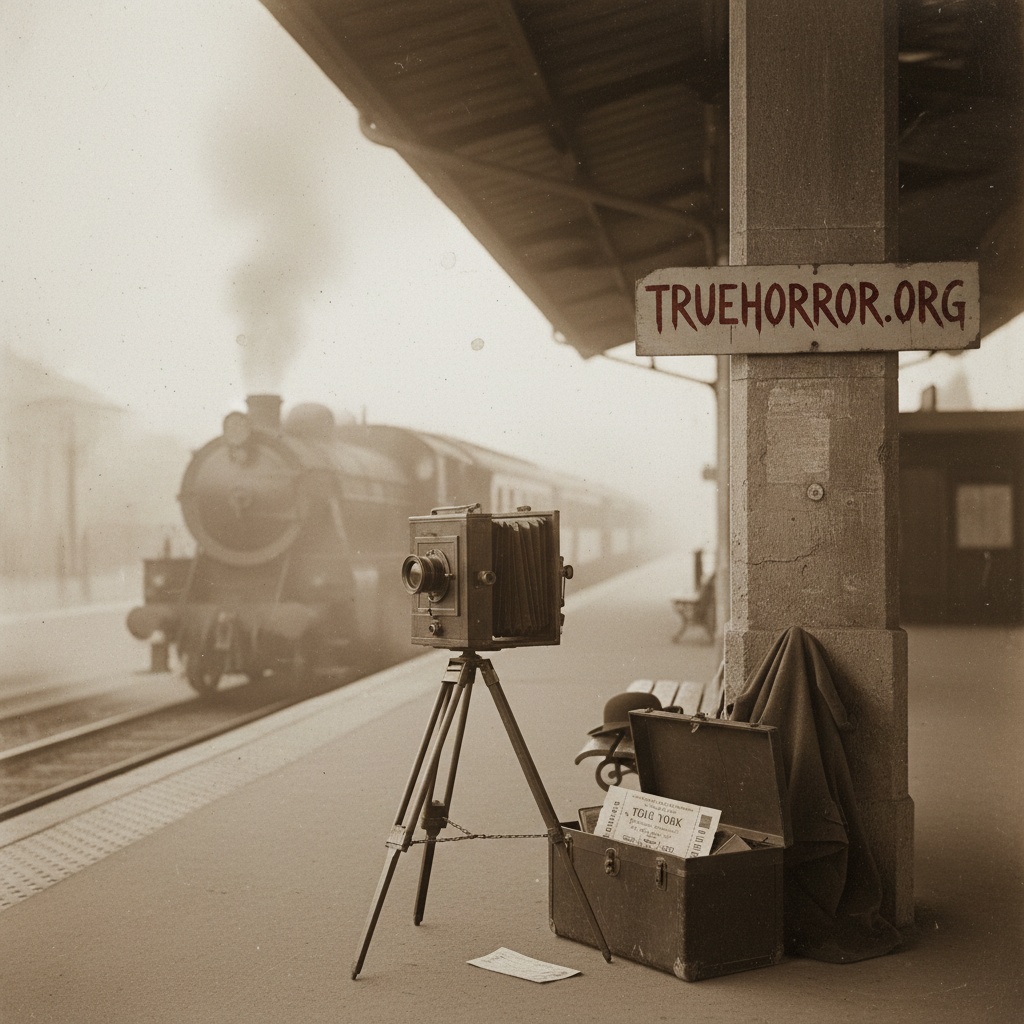
On October 14, 1888, Louis Aimé Augustin Le Prince made history by creating the first film ever, “Roundhay Garden Scene.” But two years later, Le Prince mysteriously disappeared while traveling from France to America to promote his new camera technology. Could this have been a coincidence? The fact is that today, Thomas Alva Edison and the Lumiére brothers are considered the pioneers of film, even though Le Prince had shot his first film long before them with his invention of the single-lens camera. However, his groundbreaking work in the field of moving images went largely unnoticed, mainly due to his sudden disappearance on September 16, 1890. But who was this true father of cinematography, who never achieved the fame he deserved, and what happened on that fateful day in September? Was Edison behind it, seeking to eliminate a competitor, as Le Prince’s wife Elizabeth always claimed, or did he commit suicide because of his immense debts? To shed some light on the matter, let’s take a brief look at Le Prince’s life. Louis Aimé Augustin Le Prince was born on August 28, 1841, in the French city of Metz. Le Prince grew up in an environment shaped by art and science. His father, a high-ranking artillery officer, was a close friend of Louis Daguerre, the inventor of the daguerreotype. This connection allowed the young Le Prince to gain insights into the world of photography and chemistry at an early age. He later studied painting in Paris and chemistry in Bonn and Leipzig, which gave him the necessary skills and knowledge for his later inventions. During his studies in Leipzig, he befriended the English student John Whitley, whom he followed to the industrial city of Leeds, where he worked as an engineer in his family business. There he met Whitley’s sister Elizabeth, whom he married in 1869. Le Prince was passionate about photography and explored its possibilities intensively. Together with his wife, he founded a school of applied arts in 1876, which soon became known for its innovative techniques of fixing photographs on metal and ceramics. This work led to prestigious commissions, including portraits of Queen Victoria. But his true passion was movement in images. In 1881, the couple finally moved with their children to New York, where Le Prince not only worked as a representative for the Whitley company, but also began experiments that ultimately led to the development of one of the first functional movie cameras. Initially, he had developed a camera with 16 lenses that captured 16 images simultaneously, but the different perspectives resulted in blurred images. Shortly thereafter, in 1888, he made a groundbreaking invention with his single-lens camera system and Eastman’s paper negative film. This allowed a single lens to be used to capture moving images on paper film. On October 14, 1888, he recorded the famous “Roundhay Garden Scene” – the oldest surviving film recording in the world. The film recording lasted only a few seconds and showed Le Prince’s son Adolphe, his parents-in-law, and a young acquaintance in the family garden in Leeds. Historians agree that his work actually predated that of greats such as Edison and the Lumière brothers. However, the world knew little about it because Le Prince disappeared shortly before the planned exhibition of his films. On September 16, 1890, Le Prince boarded a train from Dijon to Paris at around 2:42 p.m. He was on his way to present his groundbreaking inventions in the United States. But he never arrived in Paris. Despite intensive searches, neither he nor his luggage were ever found. This inexplicable disappearance gave rise to many theories: Some suspect that he was murdered, possibly in connection with patent disputes with Thomas Edison. Others claim that he committed suicide to escape his financial problems or that he wanted to disappear completely, possibly for personal reasons. A later investigation found a photo of an unknown drowned man from 1890 in the Seine who bore a striking resemblance to Le Prince. At the same time that Le Prince was working on his technological breakthroughs, Thomas Edison, already celebrated as an inventor in the US, began his own experiments in the field of film. Edison filed numerous patents and took aggressive action against anyone who challenged his throne as the father of film. In one such case around 1898, Le Prince was posthumously credited with a decisive role: his family attempted to refute Edison’s claim to the invention of cinematography by presenting evidence of Le Prince’s earlier work. The courts ultimately ruled in Edison’s favor, but the case once again highlighted Le Prince’s achievements, albeit too late. Although Le Prince did not receive the recognition he deserved during his lifetime, his legacy has gradually come to light. In Leeds, his adopted home, he is now honored as a pioneer of film history. A plaque on Woodhouse Lane commemorates his achievements. The University of Leeds has dedicated a center for film and television studies to him, and his films have been restored and made available to the public. Le Prince remained unknown to the general public for a long time, however, until historians and filmmakers began to retell his story. Documentaries and dramas inspired by his fate, such as “The Missing Reel” and “The First Film,” have helped Le Prince gain the recognition he deserves. The story of Louis Le Prince is more than just that of an inventor whose work went unnoticed. It is an exciting mystery intertwined with themes of ambition, intrigue, and tragedy. While the world pays homage to Thomas Edison and the Lumière brothers as pioneers of film, Le Prince remains in the shadows, a tragic figure whose potential was never fully realized. Today, however, more than a century after his mysterious disappearance, the world is increasingly recognizing his contribution to the development of film as an art form. The true story of Louis Le Prince tells not only of an inventive genius, but also of the pitfalls of recognition and the relentless pursuit of innovation that is all too human.