 Isabella Mueller (crime writer)
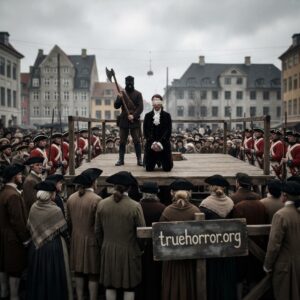
The last execution by the cruel method of breaking wheel in Austria took place on March 10, 1786, on the noble Viennese magistrate Franz Edler von Zahlheim, under Emperor Joseph II, who was a declared opponent of the death penalty. This was also the only execution carried out under Emperor Joseph II. Perhaps this was because it was a nobleman, of all people, who had committed a shameful crime that denigrated the entire nobility. But first things first. Franz Edler von Zahlheim was born around 1753 as the son of a respected family of civil servants. His grandfather, Raimund Sebastian Zaglauer, was a citizen and councilor in Vienna who, due to his special services, was elevated to hereditary nobility in 1719 as “Edler von Zahlheim.” His son, Johann Adam von Zahlheim, was mayor of Vienna from 1737 to 1740. Franz Edler von Zahlheim pursued a career similar to that of his grandfather and father. Until 1774, he was an intern and later a trainee clerk at the Vienna City Council. Initially, he did not receive a salary. It was not until 1783 that he received an annual salary of 400 guilders as a clerk. However, this was not enough to finance his extravagant lifestyle. His gambling addiction and numerous affairs with women left him with a lot of debt. He therefore became involved with an older, unmarried and allegedly wealthy woman named Ludmilla, who did not want to pay his debts. For this reason, Zahlheim secretly stole her key to break into her apartment and steal cash and valuable items. He did this on January 28, 1786, while Ludmilla was away from home. When she noticed the theft the next day, she immediately realized that Zahlheim must be behind it. Enraged, she made her way to Zahlheim’s house at Elendsbastei No. 1170 and broke in without further ado. She climbed into the attic to look for her belongings. Zahlheim had observed this and followed her to the attic. When Ludmilla rummaged through a chest, he stabbed her and slit her throat. Then he hid her body in the chest. A few days later, some relatives reported her missing. Zahlheim quickly came under suspicion of having something to do with Ludmilla’s disappearance, which is why he was interrogated by the mayor of Vienna, Josef Georg Hörl, at the town hall on Wipplinger Straße. He became entangled in contradictions and was arrested. In the meantime, his house was searched, where some stolen valuables belonging to Ludmilla were seized. Zahlheim was interrogated again and, under the weight of the evidence, made a full confession. Zahlheim was then sentenced to death by breaking wheel for aggravated theft and treacherous robbery and murder under Article 90, Paragraph 8 of the Constitutio Criminalis Theresiana. In addition, his noble titles were revoked. On March 10, 1786, Franz von Zahlheim was led to the court square of the Hoher Markt, where the sentence was read out publicly. He was then placed on the cart and pinched in the right breast with red-hot tongs. The cart then drove to the Freiung, where he received the same pinch in his left breast. He was then taken to the place of execution at Rabenstein in Rossau. Zahlheim’s arms and legs were fixed with pegs by the freeman Adam Korzer and his servants. Then the wheel was swung over him to break his bones. Zahlheim received a so-called mercy blow to the heart, which meant a quick death, as he had shown remorse. For this reason, he was not broken on the wheel from bottom to top. Zahlheim was then tied to a second wheel. This was erected on a stake and a gallows with a noose was attached above it, symbolizing that Zahlmann had been convicted not only of treacherous robbery and murder, but also of aggravated theft. A total of 12 guilders and 29 kreuzers were charged for the execution of Franz Edler von Zahlheim. Documents relating to this execution are still on display today in the Crime Museum in Vienna.